How to Play D&D Without a Dungeon Master (5 Ways)
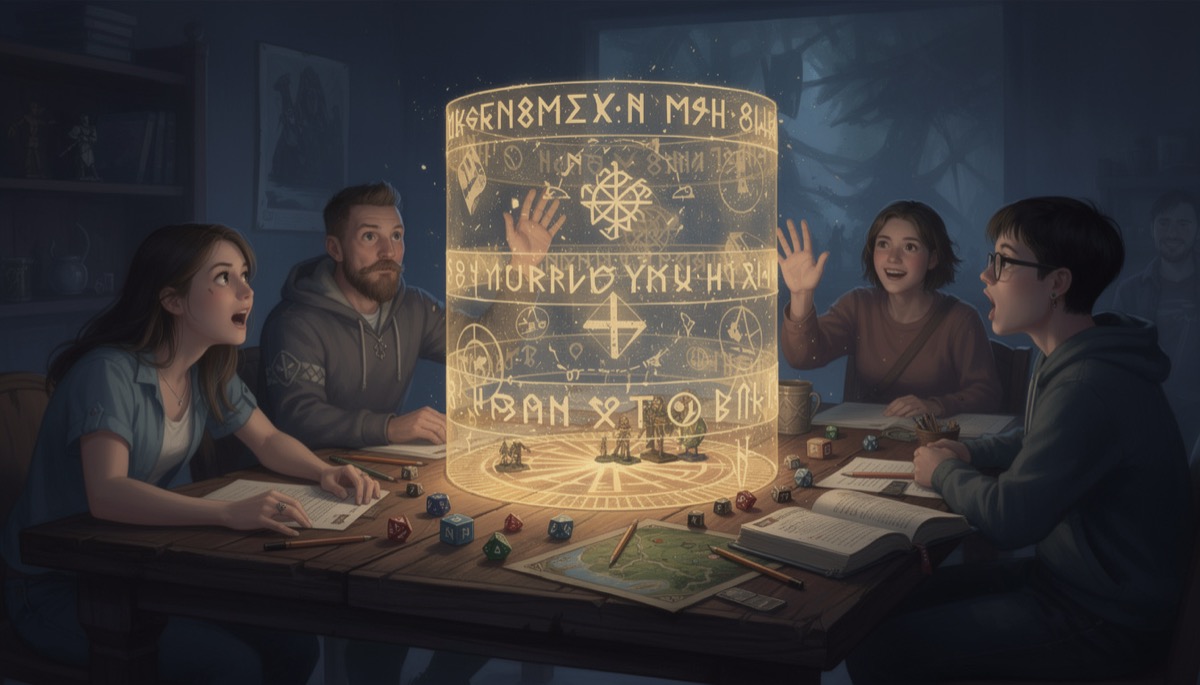
If you've ever wanted to play Dungeons & Dragons but couldn't find a Dungeon Master, you're far from alone. The DM shortage is one of the biggest barriers to entry in the tabletop RPG hobby. For every DM willing to run a game, there are four or five players searching for a seat at the table. The result? Countless would-be adventurers stuck on the sidelines.
The good news is that the tabletop community has developed a range of creative solutions over the years — and in 2026, technology has opened up even more possibilities. Whether you're a solo player, a group without a DM, or someone who just wants to play on your own schedule, there's an approach that can work for you.
In this guide we'll walk through five practical methods for playing D&D without a traditional Dungeon Master, from classic solo modules to cutting-edge AI. Let's dive in.
1. Solo Adventure Modules
Solo adventure modules are purpose-built campaigns designed for a single player with no DM required. These "choose your own adventure" style books present you with narrative passages, then ask you to make choices, roll dice, and track your character's progress through a branching storyline.
Some of the most popular solo D&D modules include Death Knight's Shadow and the D&D Solo Adventure series on the DMs Guild. These products give you a structured narrative with meaningful decisions, combat encounters resolved through standard 5e rules, and a sense of genuine progression.
The upside of solo modules is that they're inexpensive, portable, and require zero technology. You can play with nothing more than a book, a character sheet, and a set of dice. The downside is that they're finite — once you've played through a module, the story is over, and there's limited replayability since the branching paths are pre-written.
Solo modules are an excellent starting point if you're new to D&D and want to learn the rules at your own pace. They're also great for experienced players looking for a quick adventure during a gap between regular sessions.
2. Rotating DM Duties
If you have a group of friends who all want to play but nobody wants to be the permanent DM, rotating the role is a time-tested solution. Each person takes a turn running a one-shot or a short adventure arc, then hands the screen to someone else.
This approach has several advantages. Everyone gets to experience both sides of the screen. Players who DM develop a deeper appreciation for the rules and storytelling, which makes them better players when it's someone else's turn. It also distributes the preparation workload so no single person burns out.
To make rotation work smoothly, consider using a shared world where each DM runs adventures in a different region or time period. You can also run anthology-style games where each DM brings a self-contained one-shot. The West Marches format — where a large pool of players and multiple DMs share a persistent sandbox world — is another popular approach built on this idea.
The main challenge is inconsistency. Every DM has a different style, and some players may not enjoy DMing at all. If half your group dreads their turn behind the screen, the rotation can feel more like an obligation than fun.
3. Pre-Written Adventures with Simplified DM Role
Published adventure modules like Lost Mine of Phandelver or Curse of Strahd do a tremendous amount of heavy lifting for the DM. The story is written, the maps are drawn, the NPCs are detailed, and the encounters are balanced. A DM running a published module is more of a narrator and referee than a world-builder.
This dramatically lowers the barrier to DMing. If someone in your group is willing to read ahead in the book and run the encounters as written, they don't need years of experience or hundreds of hours of prep time. Wizards of the Coast and third-party publishers have made their adventures increasingly accessible, with boxed text to read aloud, clear guidance on NPC motivations, and tips for handling common player actions.
Digital tools make this even easier. Platforms like D&D Beyond provide integrated stat blocks, encounter builders, and digital maps that reduce the DM's workload to almost zero preparation. The DM simply reads the next section and reacts to what the players do.
This isn't truly DM-less play, but it's close. Think of it as "DM-lite" — someone still needs to facilitate, but the creative burden is minimal. It's a great option for groups where one person is willing to step up as long as the commitment stays manageable.
4. AI Dungeon Masters
Artificial intelligence has transformed what's possible for DM-less D&D. Modern AI Dungeon Masters can narrate scenes, roleplay NPCs, manage combat encounters, and adapt the story to your choices in real time — all without a human behind the screen.
Unlike solo modules, AI DMs offer virtually unlimited replayability. The story emerges from the interaction between you and the AI, meaning no two playthroughs are ever the same. And unlike generic chatbots, purpose-built AI DM platforms understand D&D 5e rules, track your character's stats and inventory, and handle the mechanical side of the game automatically.
AI Game Master is built specifically for this purpose. It runs persistent campaigns that remember your choices across sessions, manages full 5e combat with initiative, actions, and saving throws, and voices unique NPCs with distinct personalities and motivations. You can play solo or invite friends to join your campaign — all without needing a human DM.
AI DMs are the fastest-growing segment of the DM-less play ecosystem, and for good reason. They combine the structure and rules fidelity of traditional D&D with the flexibility and availability that no other method can match. If your biggest barrier to playing is finding a DM and coordinating schedules, an AI DM removes both obstacles at once.
5. DMless Cooperative Systems
Some tabletop RPG systems are designed from the ground up to be played without a Game Master of any kind. Games like Ironsworn, Fiasco, and For the Queen distribute narrative authority among all the players, using oracles, prompts, or collaborative storytelling mechanics in place of a traditional GM.
Ironsworn is especially popular among solo and co-op players. It uses a system of "oracle tables" — random tables you roll on to generate story elements, NPC reactions, and plot twists. The game is free, well-supported, and has an active community. Its sequel, Ironsworn: Starforged, applies the same principles to a sci-fi setting.
Fiasco takes a different approach, focusing on collaborative storytelling in the style of a Coen Brothers film. There's no GM, no dice rolling for combat — just a structured framework for building and destroying relationships between characters. It's less "D&D without a DM" and more "a completely different kind of RPG experience."
The tradeoff with these systems is that they're not D&D. If what you want is specifically the D&D experience — classes, levels, dungeon crawls, and d20 rolls — a GMless system built on different mechanics won't scratch that itch. But if you're open to exploring the broader world of tabletop RPGs, these games offer genuinely excellent play without any GM at all.
Which Method Is Right for You?
The best approach depends on your situation and what you're looking for:
- Solo modules are ideal if you want a quick, low-tech, self-contained adventure you can play anywhere.
- Rotating DM duties work best for established groups where multiple people are willing to take turns running games.
- Pre-written adventures are perfect when you have a group and one person is willing to be a "DM-lite" facilitator.
- AI Dungeon Masters are the best fit if you want the full D&D experience — persistent campaigns, 5e rules, unlimited flexibility — without depending on another person's schedule or willingness.
- DMless cooperative systems are great if you're open to non-D&D systems and enjoy collaborative storytelling.
For most people searching for "how to play D&D without a DM," an AI Dungeon Master is the closest thing to having a real DM available 24/7. It's the only option that gives you accurate D&D 5e gameplay, adaptive storytelling, and zero scheduling friction.
Ready to Play with an AI Game Master?
Apply for early access and experience AI-powered D&D adventures today.
Related Posts
How to Learn D&D Without Reading the Rulebook First
New to D&D? You don't have to memorise the rules before your first session. Here's how to learn D&D by playing it, and what the jargon actually means.
7 min readThe Complete Guide to Solo D&D in 2026
Everything you need to play D&D solo in 2026 — from journaling games and oracle systems to AI Dungeon Masters. Tools, tips, and step-by-step guidance.
7 min readBest AI Dungeon Master Tools for D&D in 2026 (Tested & Ranked)
We tested 4 AI Dungeon Master apps for D&D 5e — ChatGPT, AI Dungeon, Friends & Fables, and AI Game Master. See which handles rules, memory, and combat best.
7 min read