The Complete Guide to Solo D&D in 2026
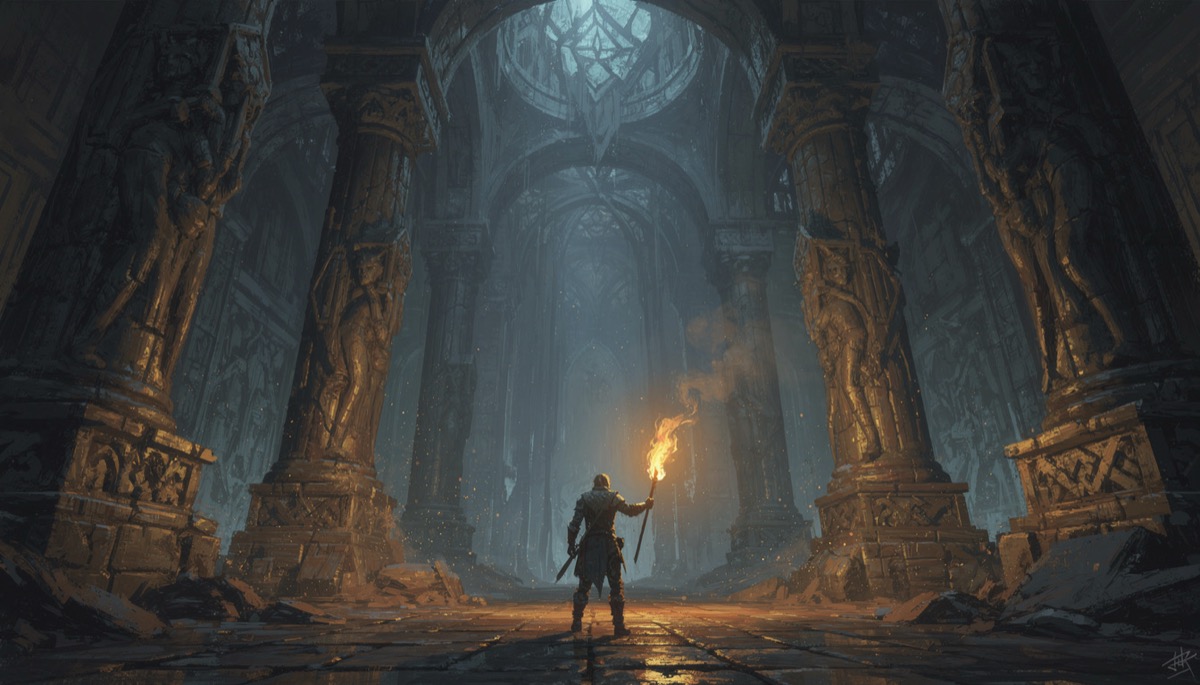
Solo Dungeons & Dragons has gone from a niche curiosity to a legitimate and thriving corner of the tabletop RPG hobby. In 2026, more people are playing D&D alone than at any point in the game's fifty-year history — and they're having a blast doing it.
Whether you're a veteran player between campaigns, a newcomer who can't find a group, or an introvert who prefers adventuring on your own terms, solo D&D offers a deeply satisfying experience. This guide covers everything you need to get started: the tools, the methods, and the practical advice that will make your solo sessions feel as rich and engaging as any group game.
Why Solo D&D Is Having a Moment
The explosive growth of solo D&D comes down to a few converging trends. First and most practically, scheduling is hard. Coordinating four to six adults with jobs, families, and competing commitments has always been the biggest obstacle to regular D&D play. Solo play eliminates that friction entirely — you play when you want, for as long as you want.
Second, the pandemic legacy still shapes how people engage with hobbies. Millions of people discovered tabletop RPGs during lockdowns, many of them through online play. A significant portion of those players found they enjoyed the creative and imaginative aspects of D&D even without a full group. Solo play became a natural extension of that discovery.
Third, solo D&D is introvert-friendly. Not everyone thrives in a group of six people roleplaying at a table. Some players find the social dynamics of group play stressful, or they want to explore their character's story at their own pace without feeling like they're hogging the spotlight. Solo play removes all of that pressure and lets you focus on the parts of D&D you enjoy most.
Finally, the tools available to solo players in 2026 are dramatically better than what existed even a few years ago. AI Dungeon Masters, digital oracle systems, and purpose-built solo RPGs have transformed the experience from "rolling on random tables and writing in a notebook" to something that genuinely rivals group play in depth and engagement.
What You Need to Get Started
Getting started with solo D&D requires surprisingly little. Here's your essential kit:
- The D&D 5e Basic Rules — Available for free from Wizards of the Coast. You don't need every sourcebook; the basic rules cover character creation, combat, spells, and core mechanics.
- Dice or a dice app — A physical set of polyhedral dice is traditional, but apps like Google Dice or dedicated RPG dice rollers work perfectly for solo play.
- A character sheet — D&D Beyond's free tier lets you build and manage a character digitally. Paper character sheets work too.
- A method for generating the story — This is where the real choice lies. You need some system to play the role of the Dungeon Master: generating encounters, narrating scenes, and reacting to your choices. We'll cover the three main methods below.
Optional but helpful: a journal or note-taking app for recording your adventures, a battle map (physical or digital) for tactical combat, and ambient music to set the mood. Many solo players find that writing a brief session log enhances the experience and helps them pick up where they left off.
Method 1: Solo Journaling Games
Solo journaling RPGs blend tabletop gaming with creative writing. You play by responding to prompts, making choices, and writing the story of your character's journey. The game provides structure and randomness; you provide the narrative.
Ironsworn is the gold standard of the genre. Designed by Shawn Tomkin and available for free, Ironsworn gives you a complete solo RPG system with a rich Nordic-inspired setting, a momentum-based mechanic for resolving actions, and oracle tables for generating everything from NPC motivations to plot twists. Its sequel, Starforged, applies the same excellent design to a space exploration setting.
Other notable solo journaling games include Thousand Year Old Vampire (you play an immortal slowly losing memories over centuries), The Wretched (a survival horror game played with a Jenga tower and playing cards), and Bucket of Bolts (you chronicle the history of a spaceship through its various owners).
The journaling approach works best for players who enjoy creative writing and are comfortable generating narrative on their own. The game gives you constraints and prompts, but you're doing most of the storytelling yourself. If you want the D&D experience specifically — with classes, levels, spell slots, and combat rounds — journaling games offer a different flavor. They're RPGs, but they're not D&D.
Method 2: Oracle Systems
Oracle systems provide a structured way to answer the questions a DM would normally handle. "Is the door locked?" Roll on the oracle. "Does the guard notice me?" Roll on the oracle. "What's in the treasure chest?" Roll on the oracle. The result gives you a yes/no answer, sometimes with qualifiers like "yes, but..." or "no, and..." that create unexpected twists.
The Mythic Game Master Emulator (Mythic GME) is the most widely used oracle system. It uses a "chaos factor" that rises and falls based on events in the game, making outcomes increasingly unpredictable as the story escalates. Mythic can be layered on top of any RPG system, including D&D 5e, which makes it extremely versatile.
Other popular oracle tools include MUNE (a streamlined alternative to Mythic), Conjecture Games' UNE (Universal NPC Emulator, specifically for generating NPC personalities and motivations), and the GameMaster's Apprentice card deck (a physical product that packs oracle tables, random events, and sensory descriptions into a single draw).
Oracle systems are powerful but demanding. You're still doing all the creative work — the oracle just provides randomized inputs to riff off of. Sessions can feel slow as you pause to roll and interpret results. That said, experienced solo players often develop a flow with their preferred oracle that becomes second nature, and the unexpected results can produce genuinely surprising and memorable stories.
Method 3: AI Dungeon Masters
AI Dungeon Masters represent the newest and most transformative approach to solo D&D. Instead of rolling on oracle tables and interpreting results yourself, you interact with an AI that narrates scenes, roleplays NPCs, manages encounters, and responds to your actions in real time. It's the closest thing to having a human DM available whenever you want to play.
The key advantage of an AI Dungeon Master is that it handles both the creative and mechanical sides of the game. It doesn't just tell you what happens — it tracks initiative, calculates damage, manages spell slots, and enforces the rules of D&D 5e. You focus on playing your character; the AI handles everything else.
Purpose-built platforms like AI Game Master go further by offering persistent campaigns that remember your choices, NPC relationships, and story arcs across multiple sessions. This solves one of the biggest limitations of using generic AI chatbots for D&D — the lack of long-term memory and campaign continuity.
AI DMs are ideal for players who want the full D&D experience without the creative overhead of oracle systems or the finite nature of solo modules. You get adaptive storytelling, rules-accurate mechanics, and unlimited replayability. The AI generates encounters, voices NPCs, and advances the plot based on your decisions — much like a human DM would, but available on your schedule.
Essential Tools for Solo Players
Beyond the core method you choose, these digital tools can significantly enhance your solo D&D experience:
- D&D Beyond — Character management, digital sourcebooks, and encounter building. The free tier covers character creation and basic rules.
- Owlbear Rodeo — A free, lightweight virtual tabletop for battle maps. No account required. Great for visualizing combat encounters during solo play.
- Notion or Obsidian — Note-taking apps ideal for campaign journals, NPC tracking, and world-building documentation. Obsidian's linked notes feature is especially useful for building a web of campaign lore.
- Syrinscape or Tabletop Audio — Ambient soundscapes designed for tabletop RPGs. Background audio adds an enormous amount of atmosphere to solo sessions.
- Donjon — A free web tool that generates random dungeons, treasure hoards, NPC names, and encounter tables. Invaluable for on-the-fly content generation.
If you're using an AI Dungeon Master, many of these tools become optional since the AI handles encounter generation, NPC creation, and rules management. But they can still add texture to your sessions — especially ambient audio and campaign journaling.
Tips for a Great Solo Experience
Solo D&D is a skill that improves with practice. Here are the most important lessons from experienced solo players:
Embrace the unexpected. The best solo sessions happen when you let go of trying to control the story. Whether you're using an oracle, an AI, or a published module, lean into surprising results rather than re-rolling or ignoring outcomes you didn't plan for. The chaos is where the memorable moments live.
Keep a journal. Writing brief session summaries — even just a few bullet points — transforms solo play. It helps you track the story across sessions, creates a satisfying record of your adventures, and often sparks ideas for what should happen next. Many solo players say their journal becomes the most rewarding part of the hobby.
Start small. Don't try to launch an epic 1-to-20 campaign in your first session. Run a one-shot dungeon crawl. Play through a single encounter. Get comfortable with whatever method you're using before committing to a long-running campaign.
Use multiple characters or a party. Playing a single character through every encounter can feel limiting, especially in combat. Many solo players run a party of two to four characters, switching between them as the situation demands. This also adds tactical depth to combat encounters.
Set the scene. Solo play thrives on atmosphere. Play ambient music, dim the lights, put your phone away. The more you invest in the experience, the more immersive it becomes. Treat it like you would a group session — give it your full attention.
Ready to Play with an AI Game Master?
Apply for early access and experience AI-powered D&D adventures today.
Related Posts
How to Learn D&D Without Reading the Rulebook First
New to D&D? You don't have to memorise the rules before your first session. Here's how to learn D&D by playing it, and what the jargon actually means.
7 min readHow to Play D&D Without a Dungeon Master (5 Ways)
Discover 5 proven ways to play Dungeons & Dragons without a traditional Dungeon Master, from solo modules to AI DMs. Start playing today.
6 min readBest AI Dungeon Master Tools for D&D in 2026 (Tested & Ranked)
We tested 4 AI Dungeon Master apps for D&D 5e — ChatGPT, AI Dungeon, Friends & Fables, and AI Game Master. See which handles rules, memory, and combat best.
7 min read