AI D&D Is Splitting Into Categories — And That's a Good Sign
TLDR
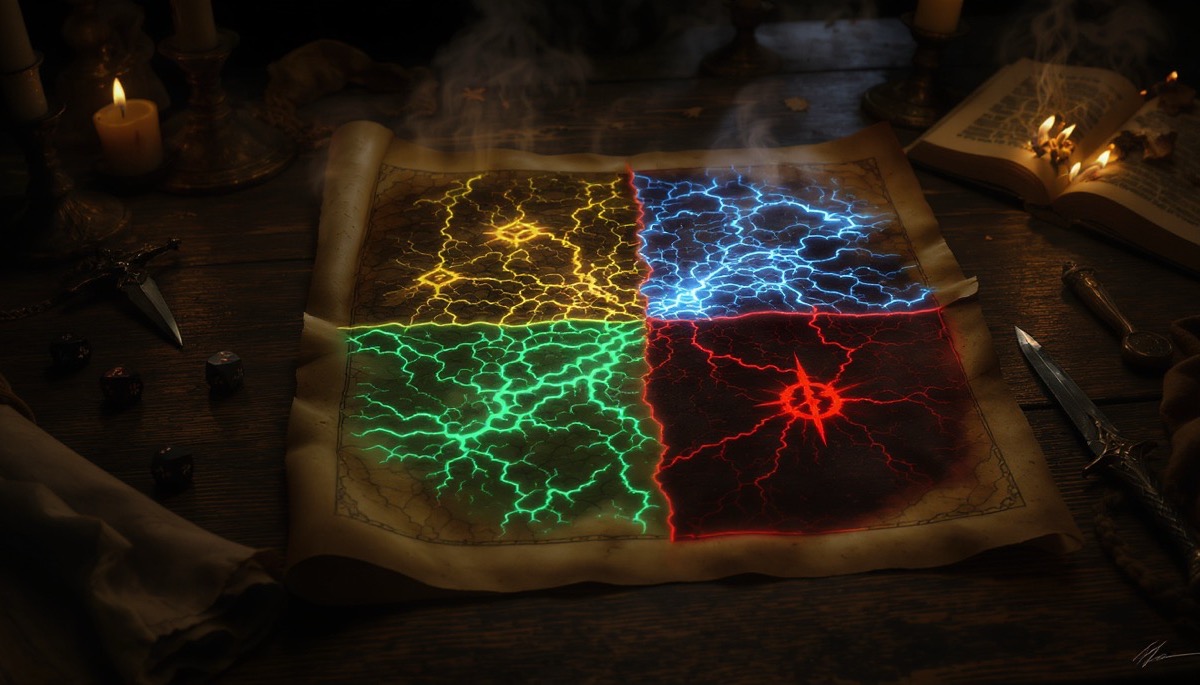
The AI D&D space is splitting into four clear categories: all-in-one AI game masters (Friends & Fables, InfiniteGM), AI-augmented DM co-pilots (Quest Portal), memory and content engines (AI Realm), and narrative-first platforms (AI Game Master). Most tools optimize for continuity — infinite worlds that keep spinning. The market gap is structured storytelling with a real beginning, middle, and end.
AI for D&D used to mean a chatbot wearing a fantasy costume. You would ask it for a description, a name, a dungeon hook, or maybe a quick NPC. It was fun, sometimes even impressive, but it felt like a demo.
That is starting to change. The current wave of AI-powered D&D tools is specialized and splitting into distinct product types: AI game masters, AI-augmented DM platforms, campaign memory tools, and content generators. Each of these solves a different problem, and that matters because tabletop games are not one job.
Understanding the Strengths of the Current Field
1. The All-in-One AI Game Masters
This is the most ambitious category, designed for solo players or groups without a human DM.
- Friends & Fables: Its strength lies in its Quest Architecture. It treats adventures as structured storylines with branching paths and specific triggers, moving away from pure "chat" and toward a logic-driven RPG engine.
- InfiniteGM: This engine leans into Technical Reliability. It focuses on "perfect memory" and complex 5e mechanics, supporting up to 20 players in a persistent state. It's built for the "infinite world" where the system stays stable even as the lore expands.
2. The AI-Augmented DM Platforms (Co-Pilots)
These tools are for the human DM who wants a high-tech assistant.
- Quest Portal: The clear leader here, Quest Portal excels at Contextual Assistance. It doesn't try to take over the story; instead, it lives inside your notes and rulebooks. Its strength is its "Assistant," which can pull a specific rule from a PDF or generate a battlemap on the fly while you maintain total control over the table.
3. The Memory & Content Engines
These tools tackle the "mentally expensive" parts of the game — the sheer volume of data involved in a long campaign.
- AI Realm: Its standout feature is its "Memory Bank" system. It uses "Story Cards" and auto-summarization to prevent the AI from losing track of long-term continuity. It is less about running the game and more about ensuring the world feels "lived-in" and consistent over months of play.
The Most Interesting Split: Open-Ended Play vs. Structured Campaigns
Not all AI D&D tools are trying to tell the same kind of story. Most lean naturally toward open-ended play. Generative systems are great at improvising and extending a world indefinitely. What they are not naturally good at is structure: setup, escalation, payoff, and a satisfying ending.
- Quest Portal offers finite adventures, but the structure comes from the human GM.
- InfiniteGM differentiates on reliability and mechanics, ensuring the game stays "fair" even if the story wanders.
- Friends & Fables is one of the few clearly pushing toward structured quests as a first-class feature.
The Market Gap: Narrative Over Noise
The most obvious gap in the current landscape is structured storytelling. While there are many tools that can keep a fantasy world spinning indefinitely, very few feel intentionally built around narrative arcs with a beginning, middle, and end.
A good campaign isn't just "endless content." It is pacing, consequence, and closure. Right now, most AI D&D tools still optimize for continuity over conclusion — they improvise beautifully, but they rarely know how to stick the landing. Without a sense of a "finish line," player choices can start to feel like they're being shouted into a void.
The Shift: Immersion vs. Emulation
Beyond story structure, there is a deeper philosophical split in how these tools treat the player.
Most AI DMs today are trying to emulate the tabletop experience. They want the AI to act like a person — a named character sitting across a digital table from you, providing long blocks of text to simulate a conversation. It's a noble goal, but it often highlights the limitations of the tech rather than its strengths.
We believe the real power of AI isn't in emulating a human DM, but in immersing you in the world. At AI Game Master, we've moved away from the "chatbot in a costume" model. Instead of long-winded text dumps from a robotic narrator, we optimize for the digital situation you're actually in. We lean into:
- High-Impact Visuals: Large, evocative images that do the heavy lifting for your imagination.
- Lean Narratives: Short, punchy descriptions that keep the momentum moving.
- Player Space: Giving you the room to play out your story without the AI constantly "interfering" to keep the conversation going.
Why We Built This
We've been tracking the specialization of AI D&D closely, and we realized that while "infinite worlds" are technically impressive, what players truly crave is a sense of place.
We built AI Game Master to be story-first and immersion-heavy. Our goal isn't to replace the social dynamic of a human table with a digital copy. It's to use the unique capabilities of AI — instant visualization and deep plot recall — to weave your choices into a cohesive journey with actual consequence.
Specialization is a sign that AI D&D is growing up. The next wave of winners won't just be the tools that can write; they will be the ones that fit naturally into how we actually play. If you're looking for a campaign that feels like a real adventure — with a real ending — come see what we're building, or check out our pricing page for access tiers.
For more context on the landscape, see our ranked breakdown of the best AI dungeon master tools for 2026 and our guide to D&D AI tools.
Frequently Asked Questions
What are the different types of AI D&D tools in 2026?
AI D&D tools have split into four categories: all-in-one AI game masters that run the whole game (Friends & Fables, InfiniteGM), AI co-pilots that assist a human DM (Quest Portal), memory and content engines that track long-term continuity (AI Realm), and narrative-first platforms focused on structured stories and immersion (AI Game Master). Each category solves a different problem because tabletop gaming isn't one job.
What is the difference between an AI Game Master and an AI DM co-pilot?
An AI Game Master runs the entire game for you — it's designed for solo players or groups without a human DM, handling narration, NPCs, and rules. An AI DM co-pilot assists a human DM by surfacing rules, generating maps, and pulling notes from your campaign binder, but the human still runs the table. Co-pilots optimize for control; AI GMs optimize for accessibility.
Which AI D&D tool is best for structured campaigns with a real ending?
Most AI D&D tools optimize for open-ended play — they can keep a world spinning indefinitely but rarely deliver a satisfying arc with setup, escalation, and payoff. AI Game Master is built around structured storytelling with finite campaigns and real endings, rather than endless improvisation. Friends & Fables is also pushing toward structured quests as a first-class feature.
What is Friends & Fables?
Friends & Fables is an AI game master platform whose core strength is Quest Architecture — it treats adventures as structured storylines with branching paths and specific triggers. Rather than pure freeform chat, it leans into a logic-driven RPG engine, which is one of the few clearly pushing structured quests as a first-class feature.
What is Quest Portal?
Quest Portal is an AI co-pilot for human DMs. Its strength is Contextual Assistance: it lives inside your notes and rulebooks and can pull a specific rule from a PDF or generate a battlemap on the fly, while the human GM maintains total control. It's the leader in the AI-augmented DM platform category.
What is InfiniteGM?
InfiniteGM is an all-in-one AI game master that leans into Technical Reliability. It focuses on perfect memory and complex 5e mechanics, and can support up to 20 players in a persistent state. It's built for the infinite world — a system designed to stay stable even as the lore expands.
How is AI Game Master different from other AI D&D tools?
Most AI DMs try to emulate the tabletop experience — they want the AI to act like a person sitting across a digital table, producing long blocks of narrated text. AI Game Master takes a different approach: rather than emulating a human DM, we immerse you in the world. We optimize for high-impact visuals, lean narratives, and player space — giving you room to play out your story without the AI constantly interrupting to keep the conversation going.
Ready to Play with an AI Game Master?
Apply for early access and experience AI-powered D&D adventures today.
Related Posts
Best AI Dungeon Master Tools for D&D in 2026 (Tested & Ranked)
We tested 4 AI Dungeon Master apps for D&D 5e — ChatGPT, AI Dungeon, Friends & Fables, and AI Game Master. See which handles rules, memory, and combat best.
7 min readDnD AI Tools: The Complete Guide for 2026
Every AI tool a D&D player needs in 2026 — AI DMs, map generators, character creators, campaign generators, and more. Compared and ranked.
4 min readAI D&D Campaign Generator: Build Adventures in Minutes
Generate complete D&D campaigns with AI in minutes. Compare the best AI campaign generators, learn how they work, and build your first adventure.
4 min read